Substation Britain: The AI Boom's Real Bottleneck Sits Behind a Fence in Teesside
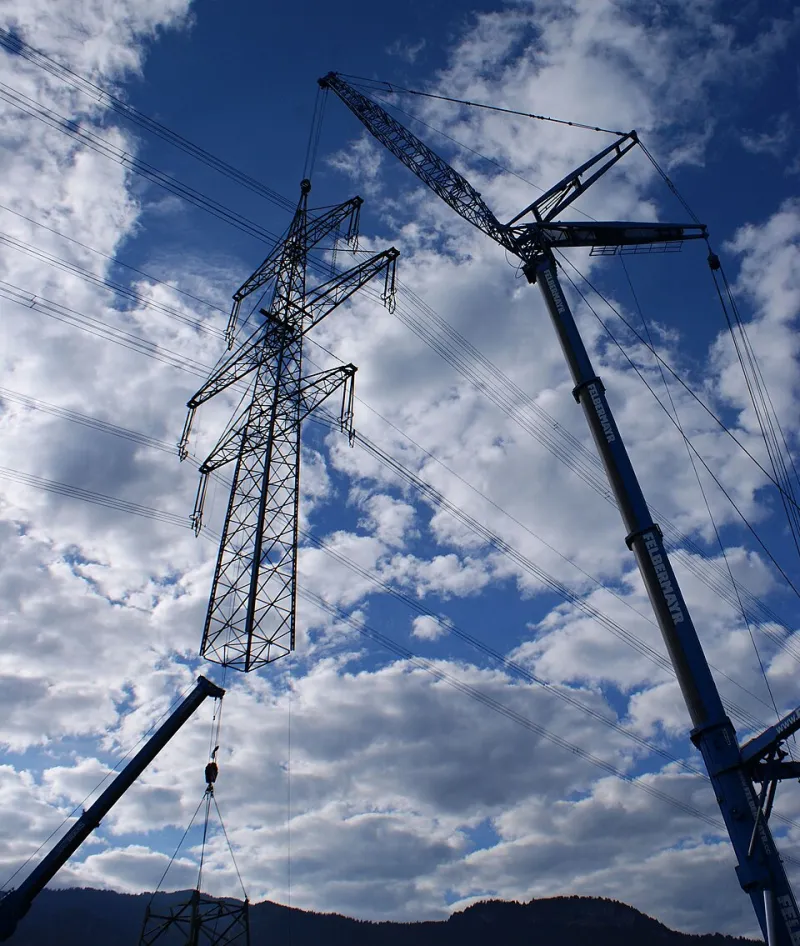
Photo: Asurnipal, CC BY-SA 4.0, via Wikimedia Commons
Ask a room of UK technologists what stands between Britain and an AI boom and you will hear about processors, model weights, skills and, if the mood is dark, energy prices in the abstract. Ask the people who actually build and finance data centres and the answer is far more concrete: a connection date, a substation, and a planning committee that meets on alternate Tuesdays.
That gap between the abstract and the physical is where British compute strategy is quietly being rewritten. The 2026 version of the national argument is no longer about who trains the largest model. It is about who can get several hundred megawatts of firm, affordable power onto a site before their competitors do. Judged on that measure, the United Kingdom is at once one of the most attractive markets in Europe and one of the most difficult to build in.
The queue was never really about demand
For most of the past decade the story told about grid connections was one of overwhelming demand. The numbers were certainly startling: the transmission connection queue at its peak contained several hundred gigawatts of proposed projects, a multiple of national peak demand, most of which was speculative and much of which would never be built. Data centres queued behind solar farms and battery parks that existed largely as options on a map.
The reform programme has been real. The National Energy System Operator has moved the queue away from a first-come, first-served model towards something closer to first-ready, first-connected, and has cleared out a large volume of phantom projects in the process. Ofgem has pushed accelerated pathways for strategically important connections. None of that has conjured copper, steel or transformers into existence faster than supply chains can manage.
The consequence is a market in dates rather than in megawatts. An operator with a live 60MW connection agreement in the Thames Valley holds an asset that is arguably more valuable than the servers it intends to put there. Latecomers are discovering that the answer to 'when can you energise?' is not a season but a decade.
Growth zones and the politics of speed
The government's answer has been to concentrate the problem. The AI Growth Zones concept, with the first site at Culham and further locations in the pipeline, is essentially an admission that Britain cannot speed up the grid everywhere, so it should speed it up somewhere. Bundle the planning, the network reinforcement, the local political consent and the anchor tenant into a single negotiation, and let the rest of the country wait.
That is a defensible strategy, and it has one underrated virtue: it gives ministers a single test of whether the policy is working. A growth zone either has power flowing into it or it does not. There is no comfortable middle ground where a strategy can be considered a success because it was well received at a conference.
The risk lies in using the zones as a substitute for the harder work of national network capacity. A special-purpose site in Oxfordshire does not shorten the connection queue in South Wales or South Yorkshire, and the clusters that already exist — the Slough and West London corridor, the emerging sites in the North East, the subsea-adjacent locations in Scotland — will not relocate because a minister cut a ribbon elsewhere.
Power is now a price, not just a plug
The second half of this story is cost, and it is where the politics gets genuinely difficult. The Review of Electricity Market Arrangements has spent years circling the question of locational pricing. Large electricity users, data centre operators chief among them, have argued consistently that zonal pricing would penalise exactly the investment the country says it wants, by pushing the price signal to the places with the least spare capacity. Network economists argue the reverse: that uniform national pricing is why the grid is congested in the first place.
Both sides are right about their own incentives. What is not in dispute is that Britain's industrial electricity prices sit well above those of the United States, and that for a business whose marginal cost is dominated by power, that gap compounds. Every year of high prices makes the case for building elsewhere a little easier to make inside a boardroom in California.
The contractual workarounds — private wire arrangements, co-location with generation, sleeving deals with renewable developers — are growing quickly, and they are quietly creating a two-tier market. Operators who can strike bespoke power arrangements will build. Operators who cannot will wait in the queue. That is an efficient outcome in the narrow sense, and a troubling one for any claim that the UK is running an industrial policy rather than an allocation lottery.
The risk that the press release outruns the cable
The announced pipeline of UK data centre capacity now comfortably exceeds what the transmission system can plausibly deliver within the decade. Some of that is normal: every market has an overhang of aspirational announcements. But Britain has a particular weakness for counting intent as investment, and the political rewards for announcing capacity are immediate, while the political costs of missed energisation dates arrive years later and attach to someone else.
There is also a physical dimension that does not appear in the strategy documents. Water availability in the South East, local air quality and noise objections, the shortage of skilled electrical engineers and the lead times on high-voltage equipment are all unglamorous constraints that bind harder than the headline grid queue. Cooling and construction are solvable with money. Transformer lead times are not.
What to watch in 2026
Three tests will separate the serious from the rhetorical. First, whether the first growth zones reach energisation rather than merely reaching planning consent. Second, whether the reformed connection queue produces offers that operators can actually finance, as opposed to letters of intent dressed up as dates. Third, whether the government resolves the pricing question in a way that gives investors a stable five-year view, rather than a rolling consultation that keeps every assumption provisional.
The uncomfortable conclusion is that Britain's compute ambitions are now bounded not by ambition but by infrastructure, and infrastructure is a slow business run by engineers rather than strategists. A country that wants to be a serious AI economy will need to become, for a while, a rather earnest country of grid planners. That is a less exciting national story. It is also the only one that ends with the lights on.